
FFDC Kannauj: India’s Premier Government Institute for Fragrance, Essential Oil & Attar Industry — A Complete Guide

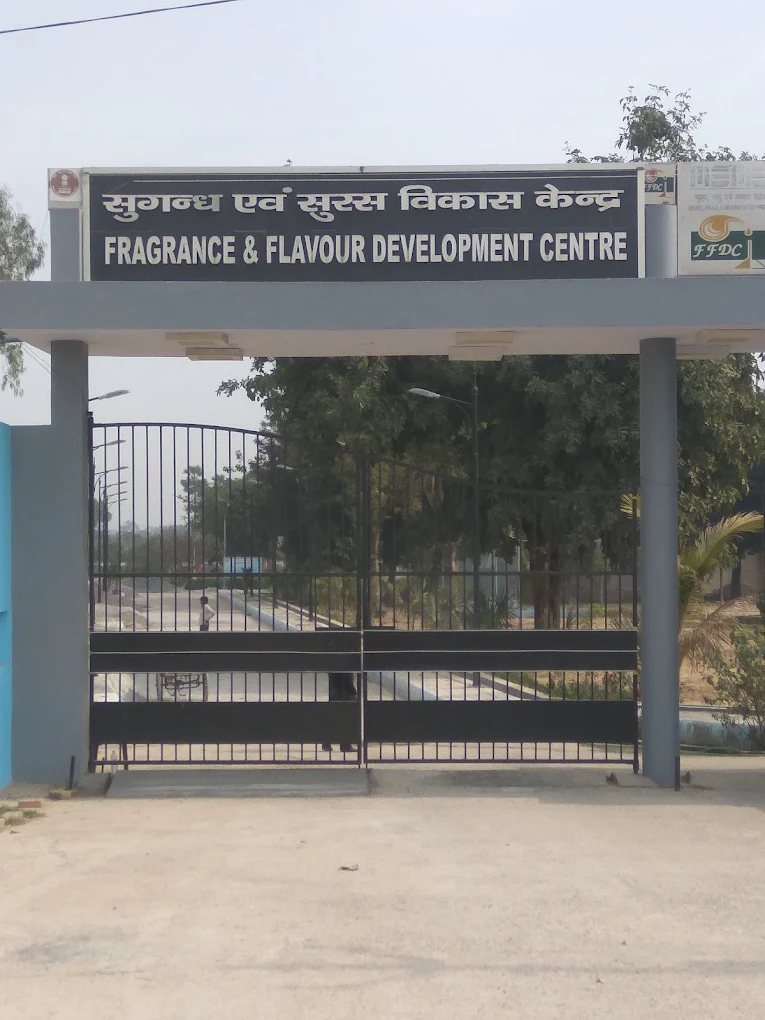
FFDC Kannauj: India's Premier Government Institute for
Fragrance, Essential Oil & Attar Industry — A Complete Guide
Everything you need to know about the Fragrance and Flavour Development Centre — its history, divisions, training programs, laboratory facilities, and how it shapes India's aroma industry and Kannauj's attar heritage.
Published by Fragranzia | Kannauj, Uttar Pradesh | Updated June 2026
Introduction: Where Ancient Perfumery Meets Modern Science
In the heart of Kannauj — a city that has been distilling fragrances for over a thousand years — stands an institution that bridges India's ancient perfumery heritage with the demands of modern global markets.
The Fragrance and Flavour Development Centre (FFDC), established by the Government of India, serves as the nerve centre of scientific and commercial development for the country's entire essential oil, attar, aroma chemical, and flavour industry.
For anyone connected to the fragrance world — whether you are a farmer growing aromatic crops, an entrepreneur launching a perfume brand, a chemistry student seeking specialisation, or a traditional attar manufacturer in Kannauj looking to upgrade your processes — understanding FFDC is not optional. It is essential.
This comprehensive guide covers everything about FFDC Kannauj: its history, structure, services, training programs, laboratory capabilities, industry contributions, and what it means specifically for the Kannauj attar community and India's broader aroma industry.
At Fragranzia, rooted in Kannauj's own perfumery heritage, we believe that knowing your industry's institutional backbone is what separates serious fragrance professionals from casual practitioners. This guide is written to give you exactly that depth.
What Is FFDC Kannauj?
The Fragrance and Flavour Development Centre (FFDC), located on GT Road, Makrand Nagar, Kannauj (Uttar Pradesh, PIN: 209726), is an autonomous body under the Ministry of Micro, Small & Medium Enterprises (MSME), Government of India.
It was created with a dual mandate: to serve as the technical interface between India's essential oil and fragrance industry and its R&D ecosystem, and to modernise, sustain, and elevate the status of farmers, manufacturers, and entrepreneurs engaged in aromatic cultivation and fragrance processing.
What makes FFDC unique is its full-stack approach. Unlike a pure research laboratory or a pure training centre, FFDC operates across five interconnected divisions — agro-technology, process engineering, fragrance creation, quality assessment, and training — making it the only institution in India that addresses the entire value chain of the aroma industry under one roof.
In simple terms: if you grow aromatic crops, FFDC can help you grow them better. If you distil essential oils, FFDC can help you process them more efficiently. If you create fragrances or attars, FFDC can help you formulate and test them. If you want to start a business in this space, FFDC can train and guide you.
FFDC's Certifications and Accreditations
FFDC holds the following internationally recognised credentials, which establish its credibility as a scientific institution:
- ISO 9001:2015 — Quality Management System certification
- ISO 14001:2015 — Environmental Management System certification
- ISO 29990:2010 — Learning services for non-formal education and training
- NABL Accreditation — National Accreditation Board for Testing and Calibration Laboratories, making its quality testing reports legally and commercially recognised across India and internationally
These certifications mean that an essential oil quality report from FFDC's laboratory is not just an internal document — it is a credible, accredited document recognised by buyers, exporters, and regulatory bodies.
History and Background: How FFDC Came to Be
Kannauj: The Perfume Capital of India
Before understanding FFDC, you must understand why it was established in Kannauj. This city in Uttar Pradesh has been known as the "Perfume Capital of India" for centuries. Its artisans have been practising the ancient Deg Bhapka hydro-distillation method — using copper stills (degs) and cooling vessels (bhapkas) — to create attars (natural oil-based perfumes) since at least the Mughal era.
Kannauj produces some of the world's most sought-after natural fragrances: Gulab (rose) attar, made by distilling Damask rose petals into sandalwood oil; Kewra attar, derived from the fragrant screwpine flower; Hina and Mitti (petrichor) attar, unique preparations found almost nowhere else on earth. The city's clustered industry of small manufacturers, farmers, and traders forms one of India's most concentrated MSME ecosystems.
Yet, for much of its history, the Kannauj fragrance industry operated largely informally. Processes were passed down through families. Quality standards were inconsistent. Farmers received little agro-scientific support. Entrepreneurs lacked access to modern formulation tools or testing infrastructure. The industry's global competitiveness was constrained by this institutional gap.
The 1991 Establishment
In 1991, the Government of India, through its then Directorate General of Technical Development (MSME-DO), established FFDC in Kannauj with financial and technical support from two major international organisations:
- UNDP (United Nations Development Programme) — which provided development funding
- UNIDO (United Nations Industrial Development Organisation) — which contributed technical expertise and international best practices
The Government of Uttar Pradesh was also a partner in the establishment, reflecting the state's recognition of Kannauj's economic importance. The location choice was deliberate: placing a modern scientific institution at the epicentre of India's traditional fragrance industry would maximise its impact on the ground.
Since 1991, FFDC has evolved into a multi-divisional institution with extension units in Kanpur (UP) and Berhampur (Odisha), reflecting its expanding geographic influence across India's diverse aroma-producing regions.
Why Kannauj Was Chosen
The choice of Kannauj was not arbitrary. Several factors converged:
Kannauj's existing industrial cluster provided an immediate audience of small manufacturers and farmers who could directly benefit from technical support. The region's soil and climate support cultivation of key aromatic crops including rose, kewra (screwpine), vetiver (khus), and various medicinal herbs. The city's established trade networks with Middle Eastern, European, and domestic markets meant that quality improvements would have immediate commercial impact. And politically, Uttar Pradesh's fragrance belt — covering Kannauj, Kanpur, and surrounding districts — represented a significant MSME cluster worth institutionally supporting.
The Organisational Structure of FFDC: Five Specialised Divisions
FFDC's work is organised into five major operating divisions, each addressing a distinct part of the aroma value chain. Understanding these divisions helps you know exactly where FFDC can help you.
Agro-Technology and Extension
This division is the agricultural backbone of FFDC. It addresses the earliest stage of the aroma value chain: the cultivation of aromatic and medicinal crops.
What This Division Does
The Agro-Technology Division operates at the intersection of agricultural science and fragrance production. Its mandate is to ensure that the farmers growing aromatic crops — the raw material suppliers to the entire attar and essential oil industry — have access to the best agronomic knowledge, quality planting materials, and appropriate post-harvest processing support.
Key activities include:
Consultancy Services for Farmers: Scientists from the division visit farmers' fields directly to provide on-the-spot guidance on aromatic crop cultivation. This includes advice on soil preparation, planting density, irrigation management, pest and disease control, and harvest timing — all of which critically affect the yield and quality of essential oil extracted from the crops.
Supply of Certified Seeds and Planting Materials: One of the most practical services FFDC offers to farmers is the provision of quality-certified seeds and vegetative planting materials of major aromatic crops. These include varieties of rose, kewra, vetiver (khus), geranium, lemongrass, palmarosa, citronella, patchouli, and various medicinal-aromatic plants. Using certified, high-yielding varieties can dramatically improve a farmer's essential oil output.
Aromatic Farm and Herbarium: FFDC maintains a demonstration aromatic farm at its Kannauj premises where improved agronomic practices are showcased. A herbarium has also been developed to systematically study and introduce improved varieties of aroma-bearing plants. This living collection serves both as a research resource and as a teaching tool for trainees.
Greenhouse Facility: A greenhouse is available for generating planting materials under controlled conditions, ensuring that propagation material remains free from disease and maintains genetic quality — a level of agricultural rigour that individual farmers rarely have access to.
Soil Testing Laboratory: The division maintains laboratory facilities for soil testing — measuring parameters like pH, organic matter, macronutrient levels, and micronutrient availability. Farmers can submit soil samples for analysis before planting aromatic crops, receiving recommendations tailored to their specific soil conditions.
Field Distillation Units (FDU): One of the most impactful services FFDC provides to small farmers is the availability of mobile Field Distillation Units. Farmers can bring their harvested aromatic crop to FFDC and get it distilled on a job-work basis, without needing to own their own distillation equipment. This removes a major capital barrier to entry for small-scale aromatic crop farmers. The fresh essential oil produced can then be assessed for quality by FFDC's laboratories.
Feasibility Reports: The division prepares technical-economic feasibility reports for entrepreneurs and farmers interested in starting aromatic crop cultivation ventures, providing crop-specific project models based on realistic yield, input cost, and market price data.
Relevance to Kannauj's Attar Industry
For Kannauj's attar manufacturers, the Agro-Technology Division represents a critical upstream resource. The quality of Gulab attar, for instance, depends entirely on the quality of rose petals used — their freshness, fragrance intensity, and oil content. FFDC's rose cultivation guidance, certified planting material supply, and field distillation facilities directly impact the quality of raw rose oil available to Kannauj's deg bhapka craftsmen. As global demand for natural ingredients grows and scrutiny over sustainability increases, FFDC's agronomic support becomes increasingly strategic for the attar industry's long-term supply security.
Process Technology Division
If the Agro-Technology Division deals with the farm, the Process Technology Division deals with what happens after harvest — the sophisticated chemical and engineering processes that transform raw plant material into purified essential oils, aroma chemicals, and fragrance isolates.
The Semi-Commercial Pilot Plant
The centrepiece of this division is a semi-commercial scale pilot plant — a set of industrial processing units sized between laboratory scale (too small for industry learning) and full commercial scale (too expensive for R&D). This scale is ideal for:
- Testing whether a laboratory-developed process is commercially viable
- Training industry personnel on real processing equipment
- Providing job-work processing services to small industrial units that cannot afford their own specialised equipment
- Standardising process conditions before they are adopted by the industry
The pilot plant contains the following major processing units:
Steam Distillation Unit: Used for extracting essential oils from plant material using steam as the carrier medium. This is the most widely used essential oil extraction method globally, suitable for crops like rose petals, kewra flowers, vetiver roots, peppermint, eucalyptus, and many others.
Solvent Extraction Unit (700-litre extractor): This unit enables the production of concretes, resinoids, oleoresins, and absolutes — highly concentrated aromatic materials extracted from flowers, resins, gums, and spices that cannot withstand the heat of steam distillation. The extractor is designed to handle soft plant material (leaves, flowers, twigs) as well as harder resinous material. Various extraction methods are supported: percolation at ambient temperature, hot solvent soxhlet extraction, repeated leaching, and agitated extraction. A solvent recovery unit is attached to minimise waste and operational cost. For Kannauj's hina and mitti attars — which involve complex multi-ingredient preparations — this kind of extraction capability is directly relevant.
Fractional Distillation Unit (250-litre capacity): This highly sophisticated unit separates essential oils into their individual chemical components (isolates) at a high degree of purity. A fractional distillation column equipped with pneumatically controlled reflux dividers and temperature sensors enables efficient separation of isolates like linalool (from coriander or rosewood oil), geraniol (from rose or geranium oil), citronellol, menthol, and other aroma chemicals. These isolates are the building blocks of modern perfumery, and the ability to produce them domestically reduces India's dependence on imported aroma chemicals.
Hydrogenation Unit (250-litre vessel, 120 Psig / 150°C capacity): Hydrogenation is a chemical reaction used to modify essential oil molecules — for example, converting citronellal to menthol, or reducing geraniol to citronellol. The hydrogenation unit at FFDC enables value-addition in essential oils by chemically modifying them into higher-value aroma chemicals, increasing the earning potential of Indian-grown aromatic crops.
Reaction Unit (300-litre multifunction reactor): A versatile reactor capable of handling diverse chemical reactions — acetylation, esterification, oxidation, and other transformation reactions used in producing synthetic and semi-synthetic aroma chemicals. When idle for aroma chemical production, this reactor can also be used for drug intermediate manufacture, making it a flexible industrial asset.
Menthol Oil Crystallization Unit (1000-litre freezer capacity): India is the world's largest producer of natural menthol, primarily from Mentha arvensis (corn mint) grown in the Terai belt of Uttar Pradesh. This crystallization unit processes mint essential oil into pure menthol crystals and menthol flakes — a highly valued ingredient in pharmaceuticals, oral care products, confectionery, and cosmetics. FFDC's menthol processing facility supports UP's mint farmers by demonstrating value-addition possibilities.
Why This Division Matters for Fragrance Entrepreneurs
For anyone wanting to understand modern aroma chemical manufacturing, or to develop new fragrance ingredients from Indian botanical sources, the Process Technology Division is where science becomes industry. Its pilot plant capabilities allow for small-batch production trials, process validation, and technology transfer to industrial units — all without the enormous capital investment that building a private chemical plant would require.
Fragrance and Flavour Division
This is the creative and formulation heart of FFDC. While the previous two divisions deal with raw material production, the Fragrance and Flavour Division deals with the art and science of combining ingredients into finished fragrance compounds, bases, and flavour applications.
What Perfumers and Flavourists Do at FFDC
Professional perfumery and flavour creation require years of olfactory training, deep knowledge of raw material chemistry, and an understanding of application requirements across personal care, home care, food and beverage, and pharmaceutical products. FFDC houses trained fragrance and flavour scientists who can:
- Create custom fragrance bases for agarbatti, dhoopbatti, personal care products, air fresheners, and other applications
- Develop natural attar-inspired modern fragrance compounds
- Formulate flavour bases for food, beverage, pharmaceutical, and nutraceutical applications
- Provide fragrance matching and reverse-engineering services for industry clients
- Assist entrepreneurs in developing their own branded fragrance products
For the Kannauj attar industry specifically, this division can serve as a bridge between traditional natural attar formulations and modern eau de parfum or fragrance compound formats — helping traditional manufacturers transition to contemporary product formats while retaining the soul of natural Indian perfumery.
Connection to Natural Indian Perfumery
India's perfumery tradition is among the oldest in the world. The subcontinent has given the world sandalwood, vetiver, rose otto, jasmine absolute, oudh, and dozens of other fragrance materials that remain foundational to modern luxury perfumery globally. FFDC's Fragrance and Flavour Division represents the institutional expression of this heritage — the place where ancient olfactory knowledge is systematised, documented, and applied using modern science.
Quality Assessment and Standardisation
This is one of the most strategically important divisions at FFDC, and arguably the most critical for any business dealing in essential oils, attars, or aroma chemicals — whether domestically or for export.
The NABL-Accredited Laboratory
FFDC operates a NABL-accredited Quality Assessment Laboratory — the highest standard of laboratory accreditation in India, equivalent to international ISO/IEC 17025 standards. NABL accreditation means that test reports issued by this laboratory are recognised by importers, exporters, regulatory authorities, and certification bodies both in India and internationally.
What FFDC's lab can test:
Physical Parameters: Specific gravity, optical rotation (refractive index), colour, appearance, and viscosity — the first-level checks that establish the basic identity of an essential oil or aroma chemical.
Chemical Parameters: Acid value, ester value, carbonyl value, solubility tests in alcohol, determination of adulteration through chemical means. These tests are critical for detecting adulteration, which remains a significant challenge in the Indian essential oil and attar trade.
Chromatographic Analysis (GC and GC-MS): Gas Chromatography (GC) and Gas Chromatography-Mass Spectrometry (GC-MS) are the gold-standard techniques for identifying and quantifying the individual chemical components of essential oils and aroma chemicals. GC-MS can definitively identify whether an oil is pure, adulterated, or of the claimed botanical origin. FFDC's capability to perform these analyses makes it an essential resource for exporters needing compliance documentation.
Soil Testing: For farmers and agricultural projects, the lab can test soil physical and chemical parameters to guide crop-specific nutrient management.
Oil Content Estimation: FFDC can estimate the essential oil content of aromatic plant material before or after harvest, helping farmers and distillers assess yield and processing efficiency.
Why Quality Testing Matters for Kannauj's Attar Industry
The Kannauj attar industry has long struggled with a trust deficit in global markets. Authentic deg bhapka attars command premium prices — but only when buyers can verify their authenticity. Adulteration with synthetic carriers, dilution with inferior ingredients, or misrepresentation of botanical origin are ongoing problems that have damaged the reputation of Indian natural fragrances internationally.
FFDC's NABL-accredited testing services provide a solution: an objective, credible, government-backed certificate of quality that can accompany every shipment. For Kannauj manufacturers seeking to export, or for premium domestic brands like Fragranzia sourcing authentic ingredients, a quality certificate from FFDC's lab is one of the most powerful trust signals available.
BIS Standards: FFDC also actively participates in the development and implementation of Bureau of Indian Standards (BIS) specifications for essential oils and aroma chemicals, helping establish national quality benchmarks that protect both producers and consumers.
Training Division
FFDC's training function is arguably its most far-reaching impact on the fragrance industry. Over three decades, the institution has trained thousands of farmers, technicians, entrepreneurs, students, and industry professionals across India.
The Philosophy of FFDC Training
FFDC's training methodology is deliberately practical. Rather than purely classroom-based instruction, all training programs combine:
- Lecture cum demonstration: Concept delivery with live process demonstrations
- Discussion and practice sessions: Hands-on work in FFDC's laboratories and pilot plant
- Field visits: On-site experience at farms, distillation units, and industry facilities
- Audio-visual learning materials: Workbooks, presentations, and recorded demonstrations
The faculty pool is exceptional. In addition to FFDC's own scientists and subject-matter experts, training programs draw on faculty from prestigious institutions including IIT Kanpur, CSIR-IIIM Jammu, CFTRI Mysore, BHU Varanasi, HBTI Kanpur, CSAU Kanpur, NBPGR Delhi, CSIR Complex Palampur, and international experts visiting the centre.
Training Courses Offered by FFDC
FFDC operates a layered portfolio of training programs targeting different audiences and experience levels:
Post Graduate Programme in Fragrance and Flavour
A full-year, specialised post-graduate program providing comprehensive academic and practical education across the fragrance and flavour sciences. Covers raw material chemistry, perfumery principles, flavour technology, quality assessment, and industry applications. The most academically rigorous offering at FFDC, targeted at science graduates seeking industry specialisation.
Technician – Aroma Process (NSQF Level 4.5)
A National Skills Qualifications Framework (NSQF) certified course at Level 4.5 — a government-recognised skill qualification that provides formal certification in aroma process technology. This is a structured vocational qualification for people seeking a career as technicians in essential oil processing, distillation, and aroma chemical manufacturing plants. NSQF certification through the National Skill Development Corporation (NSDC) makes this qualification formally portable and recognised across industries and employers nationwide.
Technology Development Programme in Aroma and Its Management
A program specifically designed for working professionals and entrepreneurs already in the aroma industry who want to deepen their technical knowledge and business management skills. Covers process optimisation, technology upgradation, business strategy, and market development.
Commercial Cultivation of Aromatic Crops, Processing and Marketing
Targeted at farmers, agricultural extension workers, and agri-entrepreneurs. Covers aromatic crop selection, cultivation techniques, harvest management, post-harvest distillation, essential oil quality assessment, and marketing strategies. A particularly important course for the Kannauj region where thousands of small farmers grow rose, kewra, and other aromatic crops.
Training on Essential Oil, Perfumery and Aromatherapy
Covers the science and application of essential oils across multiple domains: perfumery formulation, aromatherapy applications, cosmetic and personal care formulation, and quality assessment. Suitable for individuals interested in natural wellness, spa and salon businesses, and cosmetic formulation startups.
Production of Fragrant Raw Materials and Value Addition
A practical training focused on the production side — how fragrant raw materials (essential oils, concretes, absolutes, attars) are produced from aromatic crops, and how value addition processes can increase their commercial value. Directly applicable to Kannauj's traditional distillation industry.
Agarbatti, Dhoopbatti, Havansamagri and Perfumery
This highly practical entrepreneurship-oriented course covers the manufacturing of agarbatti (incense sticks), dhoopbatti (incense cones), havansamagri (ritual aromatic mixture), and perfumery compounds. These are among the largest consumer markets for fragrance ingredients in India, and this course equips aspiring entrepreneurs with everything needed to start such a business. Market sizing, raw material sourcing, manufacturing processes, quality standards, packaging, and distribution strategies are all covered.
Fragrance and Flavour Creation and Its Application – Levels I, II, and III
A progressive three-level series in the art and science of fragrance and flavour formulation. Level I introduces the fundamentals — olfactory training, raw material vocabulary, basic accords. Level II advances into complex fragrance construction, application-specific formulation, and evaluation techniques. Level III offers professional-grade training in creative perfumery and flavour development, bridging the gap between technical knowledge and artistic expression. These three levels mirror the educational pathway at international perfumery schools, adapted to the Indian context and incorporating Indian natural fragrance materials.
Quality Assessment of Essential Oils / Aroma Chemicals Using Modern Instrumental Techniques
A technical course on how to use GC, GC-MS, HPLC, and other modern analytical instruments for quality assessment and adulteration detection in essential oils and aroma chemicals. Targeted at laboratory technicians, quality control personnel, and analytical scientists working in the fragrance and flavour industry.
Summer Training for Undergraduate Students
A shorter, structured summer training program for chemistry, pharmacy, botany, and agricultural students who want exposure to the essential oil, fragrance, and flavour industry during their academic vacations. This program has introduced thousands of young students to career possibilities in the aroma industry.
Online Certificate Programme on Packaging and Processing of Fragrance, Flavour and Cosmetics
A six-month online program developed in partnership with the Indian Institute of Packaging (IIP), covering packaging technology, regulatory compliance, and processing standards for fragrance, flavour, and cosmetic products. Particularly relevant for entrepreneurs wanting to launch consumer-facing products in these categories.
Upcoming: Online Training on Fragrance and Flavour Creation (dsm-firmenich Sponsored)
FFDC has partnered with global fragrance giant dsm-firmenich to offer sponsored online training programs — a remarkable collaboration between India's government fragrance institution and one of the world's largest fragrance companies. These sponsored programs often come with training kits distributed to participants, providing hands-on materials even in an online learning format.
Library and Documentation Resources
FFDC maintains a specialised library with:
- Books, directories, and reports on essential oils, fragrances, and flavours
- National and international journals in the field
- National and international standards for essential oils (BIS, ISO, IFRA standards)
- Audio-visual resources and digital databases
- Working papers, research publications, and conference proceedings
This library is accessible to trainees, researchers, and industry professionals — making FFDC a knowledge hub rather than just a training provider.
Accommodation for Training Participants
FFDC provides boarding and lodging facilities for participants attending residential training programs at its Kannauj campus. Separate accommodation is available for women participants. This reduces barriers for participants travelling from distant locations, making FFDC's training genuinely accessible to people across India.
FFDC's Extension Units: Taking the Institution to the Industry
Beyond its Kannauj headquarters, FFDC operates two regional extension units that extend its reach:
Extension Unit, Kanpur (Uttar Pradesh)
Kanpur, just 80 km from Kannauj, is a major industrial and commercial city. FFDC's Kanpur extension unit provides closer access to Kannauj-region entrepreneurs and facilitates connections with UP's broader industrial ecosystem.
Extension Unit, Berhampur (Odisha)
FFDC's extension presence in Berhampur, Odisha, reflects the country's recognition that aromatic crop cultivation and essential oil production are not limited to Uttar Pradesh. Odisha has significant potential for crops like lemongrass, citronella, and various medicinal herbs, and the Berhampur unit supports farmers and entrepreneurs in that region.
Research and Development: FFDC's Scientific Contributions
FFDC's R&D function spans both agricultural and chemical sciences. Over three decades, the centre has contributed to:
Process Standardisation: Establishing documented, repeatable processing conditions for extraction of major Indian essential oils — ensuring that quality is reproducible rather than variable.
Value Addition Research: Developing chemical processes to upgrade the commercial value of Indian essential oils. Converting commodity essential oils into higher-value isolates and aroma chemicals increases margins for Indian producers.
Aromatic Variety Development: Working on identifying and propagating superior varieties of aromatic crops that yield higher oil content, better fragrance quality, or improved agronomic traits.
Technology Transfer: FFDC has transferred numerous processing technologies to small and medium enterprises, helping them upgrade their production capabilities without having to independently fund expensive R&D.
Standardisation and BIS Participation: Contributing to national standards for essential oil quality — work that has long-term impact on India's competitive positioning as an essential oil exporter.
FFDC's Contribution to the Kannauj Attar Industry
The relationship between FFDC and Kannauj's traditional attar industry is one of the most significant dimensions of the institution's impact, and one that is not always fully understood or appreciated.
Preserving the Deg Bhapka Tradition While Modernising It
The Deg Bhapka distillation method is Kannauj's most iconic contribution to world perfumery. Using copper degs (stills) placed over wood-fired hearths, with bamboo pipes connecting them to copper bhapkas (cooling vessels) submerged in water, artisans hydro-distil fragrant flowers — rose, kewra, champa, marigold, mehndi — directly into sandalwood oil. The result is an attar: a natural, alcohol-free perfume of extraordinary complexity and persistence.
This method is so unique that it was awarded a Geographical Indication (GI) tag under the name "Kannauj Perfume" — one of India's most prestigious craft GI recognitions.
Yet the deg bhapka method faces modernisation pressures. Sandalwood is scarce and expensive. Wood-fired distillation generates emissions. Quality consistency is difficult to achieve. Global buyers demand documentation and certifications. Young craftspeople are increasingly drawn to other livelihoods.
FFDC addresses each of these challenges:
- Its agro-technology division supports aromatic crop farmers who supply raw materials to deg bhapka artisans
- Its process technology division explores alternative carrier oils and modernised distillation approaches that could reduce sandalwood dependence while preserving attar character
- Its quality assessment laboratory provides the GC-MS testing and certification documentation that international buyers require
- Its training programs help young people from Kannauj see a formal, certified career pathway in the fragrance industry, rather than viewing it as an informal craft with no professional future
Supporting the Transition to Modern Formats
Many Kannauj attar manufacturers have begun exploring modern product formats — eau de parfums, body mists, reed diffusers, scented candles — alongside their traditional attars. FFDC's fragrance and flavour division and its training programs in fragrance creation support exactly this transition, providing the formulation knowledge needed to adapt traditional attar profiles into contemporary product formats that appeal to younger domestic consumers and international buyers.
FFDC and MSME Development: Supporting Fragrance Entrepreneurs
FFDC's parent ministry — the Ministry of MSME — reflects its fundamental orientation toward small business development. Every service FFDC offers is ultimately aimed at enabling India's millions of small fragrance, essential oil, and aroma industry entrepreneurs.
Services for New Entrepreneurs
Project and Feasibility Reports: FFDC prepares detailed project reports and feasibility studies for entrepreneurs wanting to start essential oil distillation units, attar manufacturing businesses, agarbatti factories, or fragrance formulation units. These reports cover capital requirements, equipment lists, raw material sourcing, process flow, quality standards, regulatory requirements, and financial projections.
Process Consultancy: Entrepreneurs can access direct one-on-one technical consultancy from FFDC's scientists on process design, equipment selection, quality system establishment, and troubleshooting.
Common Facility Services: Small entrepreneurs who cannot afford specialised equipment — like fractional distillation columns or GC-MS analysers — can use FFDC's facilities on a job-work basis, paying only for the specific service or processing run they need. This dramatically reduces barriers to entry and enables small players to access world-class capabilities.
Market Intelligence and Documentation: FFDC's library and documentation services provide market data, international standards, trade statistics, and technical publications that help entrepreneurs make informed business decisions.
Collaboration with National Institutions
FFDC has established formal collaborations with a distinguished network of institutions:
- IIT Kanpur — for advanced chemical research and technical expertise
- IIIM Jammu (CSIR) — India's premier institute for medicinal and aromatic plant research
- BIS (Bureau of Indian Standards) — for quality standardisation activities
- NSDC (National Skill Development Corporation) — for NSQF-certified skill development programs
- FAFAI (Fragrance and Flavour Association of India) — the industry body representing India's fragrance and flavour sector
- dsm-firmenich — one of the world's largest fragrance and flavour companies, for joint training initiatives
Who Benefits from FFDC? A Stakeholder-Wise Guide
Farmers
Certified seeds & planting material, field distillation units (job-work), soil testing, on-farm agronomic guidance, and training on commercial aromatic crop cultivation.
Students
Summer training programs, PG specialisation courses, NSQF-certified technician qualifications, library access, and networking with FFDC scientists and visiting faculty.
Manufacturers
NABL-accredited quality certificates, process consultancy, pilot plant job-work services, workforce upskilling, and new product development support.
Attar Artisans
Authenticity testing to distinguish deg bhapka attars, certified career pathways for the next generation, documentation for premium buyers, and process sustainability guidance.
Entrepreneurs
Project feasibility reports, training in attar and fragrance manufacturing, business plan support, common facility access, and consultancy from concept to commercial operation.
Benefits for Farmers
If you cultivate or want to cultivate aromatic crops — rose, kewra, vetiver, mentha, lemongrass, geranium, patchouli, or other medicinal-aromatic plants — FFDC offers you:
- Certified seeds and planting material of improved varieties
- On-field technical guidance on cultivation best practices
- Soil testing to optimise fertiliser use
- Access to field distillation units to extract essential oil from your harvest without owning a still
- Training on commercial aromatic crop cultivation, including market linkages
- Help with understanding quality requirements so that your oil fetches better prices
The practical impact is significant: a farmer using FFDC's improved rose variety, with guidance on optimal harvest timing, and access to FFDC's field distillation unit, can extract substantially more essential oil of better quality from the same land area compared to traditional informal practices.
Benefits for Students
If you are a science student — chemistry, pharmacy, botany, agricultural science, chemical engineering — FFDC offers a uniquely industry-connected educational experience:
- Undergraduate summer training programs that provide real fragrance industry exposure
- Post-graduate specialisation programs that are directly recognised by the industry
- NSQF-certified technician qualifications that provide formal employability credentials
- Access to FFDC's library and research resources for academic projects
- Direct networking with FFDC's scientists and visiting faculty from premier institutions
- The possibility of becoming a professional perfumer, flavourist, essential oil chemist, or quality analyst in one of the fastest-growing consumer industries globally
India's fragrance and flavour market is projected to grow significantly in the coming decade, driven by rising consumer spending, the global natural and clean beauty movement, and expanding food processing industries. Career opportunities in this space are multiplying, and FFDC-trained professionals are well-positioned to fill them.
Benefits for Manufacturers
If you are already manufacturing essential oils, attars, perfume compounds, agarbatti, cosmetics, or flavoured products:
- FFDC's NABL-accredited laboratory provides quality certificates that enhance your products' credibility with buyers
- Process consultancy can help you troubleshoot quality problems or improve yield
- The pilot plant's job-work services let you access distillation, extraction, or fractionation capabilities without capital investment
- Training programs can upskill your workforce in quality control, process operation, and fragrance formulation
- FFDC can help you develop new products — custom fragrance bases, specialty essential oil fractions, or new attar formulations — using its formulation expertise
Benefits for Attar Artisans (Deg Bhapka Craftspeople)
For the traditional deg bhapka artisans of Kannauj — the custodians of India's living perfumery heritage:
- Quality testing services ensure that your authentic attars can be distinguished from inferior imitations in the market
- Training programs help the next generation of your craft community acquire formal, certified skills
- FFDC's documentation and market support helps your products reach premium buyers who value authentic, certified natural perfumes
- Technical guidance on process improvements can help reduce fuel consumption and environmental impact of traditional distillation, addressing sustainability concerns without compromising the essential character of the deg bhapka process
Benefits for Entrepreneurs and Investors
If you are considering entering the Indian fragrance, essential oil, or aroma industry:
- FFDC provides the project reports and feasibility studies you need to evaluate investment decisions with real data
- Training programs give you both the technical knowledge and the industry networks to start well
- The combination of FFDC's institution support with India's growing fragrance market, its deep natural raw material base, and the premium that global buyers attach to authentic Indian fragrance ingredients creates a compelling entrepreneurial opportunity
- FFDC's consultancy can guide you from concept to commercial operation, reducing the time and cost of learning by trial and error
Important Facilities at FFDC Kannauj
Here is a consolidated summary of the key physical facilities available at FFDC:
| Facility Category | Key Equipment / Infrastructure |
|---|---|
| Pilot Plant Processing Units | Steam distillation unit; Solvent extraction unit (700 L); Fractional distillation column (250 L); Hydrogenation unit (250 L, 120 Psig / 150°C); Multifunction reaction unit (300 L); Menthol crystallization system (1000 L freezer); Glass-lined reactor with cryostat (60 kg charge capacity) |
| Quality Assessment Laboratory (NABL) | GC and GC-MS analysis systems; HPLC systems; Physical testing instruments (refractometer, polarimeter, densitometer); Chemical testing for acid / ester / carbonyl value; Soil testing equipment; Oil content estimation apparatus |
| Agro-Technology Facilities | Demonstration aromatic farm; Botanical herbarium; Greenhouse for planting material propagation; Soil testing laboratory; Mobile Field Distillation Units (FDU) |
| Training Infrastructure | Modern classrooms and lecture halls; Laboratory training spaces; Audio-visual equipment; Demonstration area linked to pilot plant; Hostel accommodation (separate for men and women) |
| Library | Specialised collection of books, journals, standards, and databases on essential oils, fragrances, flavours, and related sciences |
| Administrative Facilities | Documentation centre; RTI compliance office; Archives; Extension units at Kanpur (UP) and Berhampur (Odisha) |
The Global Context: Where India's Aroma Industry Stands
India is among the world's top producers and exporters of essential oils. The country produces significant commercial quantities of mentha oil (the world's largest producer), sandalwood oil (increasingly from sustainable sources in southern India and internationally), vetiver oil, rose oil, jasmine absolute, patchouli oil, lemongrass oil, citronella oil, geranium oil, and dozens of specialty botanicals.
Yet despite this natural advantage, India's fragrance and flavour industry has historically underperformed its potential. Key gaps include: inconsistent quality standards that make buyers uncertain; limited domestic fragrance formulation capability that forces dependency on imported compounds; inadequate agronomic support that results in crop failure and poor essential oil yields; lack of formal skill development that leaves the industry reliant on informal knowledge transmission.
FFDC was created to address all of these gaps simultaneously. Over thirty years, its impact has been substantial — though the work is far from complete. The opportunity for India to become not just a raw material exporter but a global leader in finished natural fragrances, functional food flavours, and specialty aroma chemicals remains largely unrealised — and FFDC represents the institutional infrastructure through which that potential can be unlocked.
From Fragranzia's perspective in Kannauj, this is not an abstract aspiration. Every authentic attar we produce, every natural ingredient we source, every fragrance story we tell, is part of India's aroma industry narrative — and FFDC's work directly shapes the quality of that narrative.
Frequently Asked Questions
What is FFDC Kannauj?
FFDC, or the Fragrance and Flavour Development Centre, is an autonomous body under India's Ministry of MSME established in 1991 in Kannauj, Uttar Pradesh. It serves as the country's primary government institution for research, training, quality testing, and industry support across the essential oil, fragrance, flavour, and attar sectors.
Who set up FFDC and when?
FFDC was established in 1991 by the Government of India through the Ministry of MSME, with technical and financial support from UNDP (United Nations Development Programme), UNIDO (United Nations Industrial Development Organisation), and the Government of Uttar Pradesh.
Is FFDC a government institute?
Yes. FFDC is an autonomous body directly under the Ministry of Micro, Small & Medium Enterprises, Government of India. It is not a private institution. It holds ISO 9001:2015, ISO 14001:2015, and ISO 29990:2010 certifications, and its quality laboratory is NABL accredited.
What training courses does FFDC offer?
FFDC offers a wide range of training programs including: Post Graduate Programme in Fragrance & Flavour, NSQF Level 4.5 Aroma Technician course, aromatic crop cultivation training, essential oil and aromatherapy workshops, agarbatti/dhoopbatti manufacturing training, fragrance and flavour creation courses (Levels I–III), quality assessment using modern instruments, undergraduate summer training, and an online certificate program on fragrance and cosmetics packaging. It also conducts workshops sponsored by global companies like dsm-firmenich.
Can farmers get help from FFDC?
Yes. FFDC's Agro-Technology Division provides direct services to aromatic crop farmers including: certified seed and planting material supply, field visits for on-site cultivation guidance, soil testing, access to field distillation units on a job-work basis, training on aromatic crop cultivation and processing, and preparation of feasibility reports for aromatic farming ventures.
Does FFDC provide quality testing services for essential oils?
Yes. FFDC operates a NABL-accredited Quality Assessment Laboratory that tests essential oils, aroma chemicals, and related materials for physical parameters, chemical composition, GC-MS profiling, adulteration detection, and compliance with BIS and international standards. Test reports from this lab are commercially and legally recognised in India and internationally.
How does FFDC help Kannauj's attar industry?
FFDC supports Kannauj's traditional attar industry in multiple ways: it provides quality testing and certification services that help authenticate deg bhapka attars in global markets; its training programs build formal skills in the artisan community; its agro-technology division supports aromatic crop farmers who supply raw materials to attar distillers; its fragrance formulation expertise helps manufacturers develop modern product formats alongside traditional attars; and its documentation and consultancy services help attar businesses understand and access export markets.
What is the NSQF Level 4.5 Aroma Technician course?
The Technician – Aroma Process course at NSQF Level 4.5 is a government-recognised vocational qualification that trains individuals to work as skilled technicians in essential oil processing, aroma chemical manufacturing, and related industrial operations. NSQF certification is formally recognised across industries and employers under India's National Skills Qualifications Framework. It is the most standardised entry-level technical qualification available in India's aroma industry.
Does FFDC help entrepreneurs start fragrance businesses?
Yes. FFDC's services for entrepreneurs include project and feasibility report preparation, process consultancy, training in fragrance and attar manufacturing, agarbatti/dhoopbatti business setup guidance, access to pilot plant equipment on a job-work basis, quality testing for product certification, and market intelligence through its library and documentation services.
What is the connection between FFDC and GI-tagged Kannauj perfume?
Kannauj Perfume, produced using the traditional deg bhapka hydro-distillation method, holds a Geographical Indication (GI) tag — one of India's most prestigious craft recognitions. FFDC, as the government's institutional presence in Kannauj, supports the authenticity and quality ecosystem of this GI product through its testing, research, and training services. While FFDC did not create the GI tag directly, its work in quality standardisation and documentation is essential to making the GI designation commercially meaningful in domestic and international markets.
Can I visit FFDC as an industry professional or researcher?
Yes. FFDC's campus is located on GT Road, Makrand Nagar, Kannauj, UP 209726. Industry professionals, researchers, students, and interested visitors can contact FFDC to arrange visits. The centre also participates in industry events, seminars, and exhibitions, and maintains an active presence on social media (Facebook, Twitter, LinkedIn, Instagram) as @FFDCKannauj.
What aromatic crops can FFDC help me grow?
FFDC provides agronomic guidance and planting material for a wide range of aromatic crops including rose (Rosa damascena), kewra (Pandanus odoratissimus), vetiver/khus (Chrysopogon zizanioides), geranium (Pelargonium graveolens), lemongrass (Cymbopogon citratus), palmarosa (Cymbopogon martinii), citronella (Cymbopogon nardus), patchouli (Pogostemon cablin), peppermint (Mentha piperita), spearmint (Mentha spicata), corn mint/Mentha (Mentha arvensis), marigold (Tagetes erecta), and various other medicinal-aromatic plants.
Conclusion: FFDC as the Institutional Pillar of India's Fragrance Legacy
If Kannauj is the heart of India's perfumery heritage, FFDC is the modern institutional infrastructure that keeps that heart beating in the 21st century. For thirty-plus years, this quietly purposeful government centre has trained thousands, tested thousands of samples, supported thousands of farmers, and connected ancient craft traditions to modern scientific standards.
For Fragranzia — rooted in Kannauj's attar legacy and committed to authentic natural fragrance — FFDC represents something important: the proof that India's fragrance industry has serious, government-backed institutional depth. Authentic Indian attars and essential oils are not just romantic artisanal products. They are backed by a scientific ecosystem, a quality infrastructure, a skill development system, and a research network. That ecosystem is what makes Indian natural fragrance credible and competitive globally.
Whether you are a farmer wondering which aromatic crop to grow next season, a student deciding between career paths, an entrepreneur designing your fragrance startup, or a brand like ours committed to sourcing and sharing the best of Kannauj — understanding FFDC, its capabilities, and how to engage with it is essential knowledge.
The Indian fragrance industry's future will be written by those who understand both its ancient roots and its modern infrastructure. FFDC is the bridge between those two worlds.


informative information “thanyou fragranzia”
Happy 😊 . Thank you for the information
Excellent experience! The fragrances are long-lasting and beautifully crafted.
i visited ffdc, thankyou fragranzia
I want to learn and get Full knowledge about fragrance, essential oil and attars. Please suggest me if I can get any certification course for the same. Preferably online course.
Thank you, Harssh. We’d be happy to help. Please send us a direct message or contact us through our website. Based on your goals, we’ll recommend the best learning path for fragrance, essential oils, perfumes, and authentic Kannauj Attars.